Working at Heights Safely: A Guide for Tradies and Facility Managers
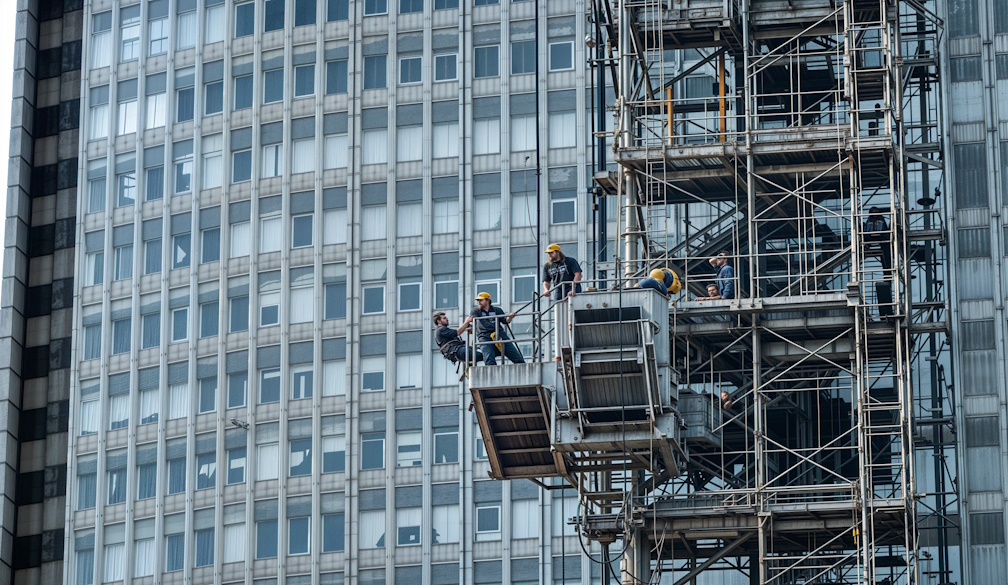
Ladders are brilliant until they aren't. They are cheap, light and always in the ute, which is exactly why they get used for jobs they were never meant for. Changing a single light globe is one thing. Spending half a day running cable through a warehouse ceiling while balancing on the top rungs of a stepladder is something else entirely.
Falls from height remain one of the leading causes of serious injury and death in Australian workplaces, and many happen from surprisingly low heights. Choosing the right access equipment for the job, whether that is a mobile scaffold, a boom lift or scissor lift hire for a few days of overhead work, is one of the simplest ways to bring that risk down.
What the rules say
Work health and safety laws across Australia require businesses to manage the risk of falls. The approach follows a hierarchy of control, which in plain terms means:
First, eliminate the risk if you can, for example by doing the work on the ground. Prefabricating sections and lifting them into place is a good example.
If that is not possible, use a passive fall prevention system such as a solid platform with guardrails, scaffolding or an elevating work platform.
If that is not practicable, use a work positioning system, such as a travel restraint that stops a worker reaching an edge.
Fall arrest systems, such as harnesses and lanyards, are further down the list. They do not prevent a fall, they reduce the harm when one happens.
Ladders sit near the bottom, suitable for short-duration, low-risk tasks when better options are not reasonably practicable.
Safe Work Australia's model Code of Practice on managing the risk of falls sets out the detail, and each state regulator publishes its own guidance.
Matching the equipment to the job
Scissor lifts raise a platform vertically and suit tasks where you need to reach a ceiling or wall directly above a flat, solid surface. They are popular for fit-outs, electrical work, painting and warehouse maintenance. Many models are compact enough to fit through standard doorways.
Boom lifts extend outwards as well as upwards, so they can reach over obstacles. They suit building facades, tree work and areas where you cannot position a machine directly beneath the work.
Mobile scaffolds are useful for longer jobs where several workers need a stable platform, especially in tighter spaces.
Ladders are fine for quick access or very short tasks, provided they are the right type, in good condition and used correctly.
Questions to ask before you start
Before choosing equipment, walk the site and ask a few practical questions. How high do you need to reach? Is the ground level and strong enough to support the machine? Are there overhead powerlines, beams or ductwork? How much room is there to manoeuvre? Will other workers or members of the public be moving around below?
The answers will usually point you towards the right gear. If they do not, a good hire company can help you work it out.
Licences and training
Operators of boom lifts with a reach of 11 metres or more need a high risk work licence. Scissor lifts and smaller boom lifts do not require that licence, but operators must still be trained and competent. Many hire companies and training providers run short courses covering pre-start checks, safe operation and emergency lowering.
Do not assume a worker knows how to use a machine because they have "driven one before". Models differ, and familiarisation with the specific unit is part of doing it properly.
Common mistakes on site
A few problems crop up again and again:
- Using an elevating work platform on uneven or soft ground
- Overloading the platform with materials and tools
- Climbing on guardrails to gain extra reach
- Skipping pre-start inspections because the job is "only quick"
- Leaving machines unattended with keys in them
Each of these is avoidable with a bit of discipline and a culture where workers feel comfortable speaking up.
Hiring versus buying
For most trades businesses and facility managers, hiring makes more sense than owning. Access equipment needs regular inspection and servicing, takes up storage space and may sit idle between jobs. Hiring means you get a machine suited to each specific task, maintained by someone else.
Buying might make sense if you use the same type of equipment constantly. Otherwise, the flexibility of hiring usually wins.
Getting everyone home
The goal is simple: everyone goes home at the end of the day in the same condition they arrived. Taking an extra ten minutes to choose the right equipment and check it properly is a small price to pay for that.