Choosing Materials for Melbourne Kitchens and Bathrooms: A Climate and Lifestyle Guide
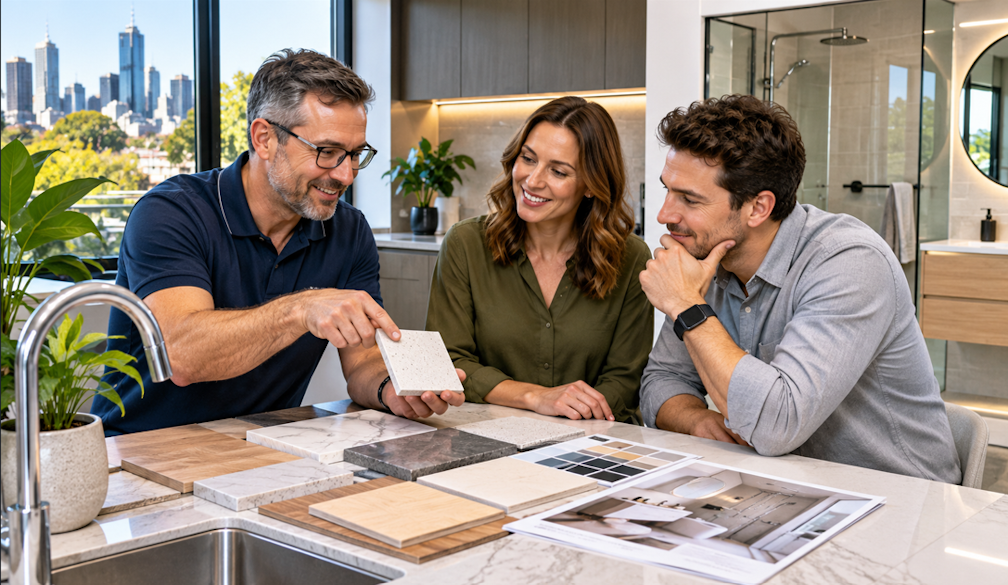
Melbourne has a reputation for weather that moves through four seasons in a single afternoon. For homeowners planning a renovation, that reputation is more than a punchline. The materials chosen for a kitchen or bathroom need to cope with sharp temperature swings, elevated winter humidity, and water chemistry that varies suburb by suburb. Experienced kitchen renovators melbourne see this play out often: picking the wrong finish can mean warped cabinetry within two years, grout that darkens by the first winter, or tapware pitted by mineral scale.
This guide walks through the material decisions that matter most for Melbourne homes, from benchtops and cabinetry through to tiles, grout, and tapware. The goal is a kitchen and bathroom that still look right a decade after the installers leave.
Understanding Melbourne's Climate Reality
Melbourne sits in an oceanic temperate zone (Köppen Cfb). Summer averages peak near 27°C while winter lows drop to roughly 6°C, and relative humidity climbs from 66% in warmer months to around 85% during June. That winter humidity is the figure most homeowners underestimate. Wet areas with poor ventilation can hold moisture against surfaces for days, which accelerates swelling in timber substrates and feeds mould growth in grout lines.
Water quality adds another layer. Melbourne's citywide hardness median sits around 26 mg/L, but readings range from 8 to 108 mg/L across supply zones. Suburbs such as Riddells Creek and Gisborne, served by Greater Western Water, record hardness around 108 mg/L, the highest in metropolitan Melbourne. If a project sits in the inner north or inner east, scale is a minor consideration. If it sits in the north west, it becomes a design driver.
Benchtops and Kitchen Surfaces
For Melbourne kitchens, the benchtop is where climate and daily use collide. Engineered stone remains popular for its durability, but the choice of edge profile and sealant matters more in a climate with wide temperature swings. Mitred edges on stone benchtops can open slightly over time if the substrate expands and contracts seasonally. Laminated edge profiles tend to perform more reliably across Melbourne winters than tight mitres on long runs, particularly in homes with reverse cycle heating that shifts room temperature multiple times each day.
Natural stone such as marble or limestone brings character but reacts to acidic spills from citrus, wine, or vinegar. In a Melbourne home where the kitchen often doubles as entertaining space, this trade off is real. Porcelain slab benchtops have gained ground as a middle option: they handle thermal shock from hot pans, resist staining, and perform well against mineral residue in suburbs with harder water.
For splashbacks, glass continues to dominate, though large format porcelain tiles with rectified edges are a strong alternative. They need fewer grout lines, which matters in a city with high winter humidity because every grout line is a potential mould site.
Cabinetry and Joinery Considerations
Cabinetry choices in Melbourne homes are shaped by humidity more than temperature. Melamine faced particleboard is the standard, and it performs well when edges are properly sealed. The failure point is almost always water ingress at an unsealed edge near the sink or dishwasher.
Timber veneer cabinetry suits period homes and open plan designs where joinery flows into living areas. It expands and contracts more than melamine, so panel widths and reveal gaps need to account for seasonal movement. Two pack polyurethane finishes offer a hard wearing surface but require a controlled application environment. Internal drawer boxes in solid timber or metal perform better than particleboard in bathrooms where humidity is highest.
Bathroom Tiles, Grout, and Waterproofing
Bathrooms carry the heaviest material burden in Melbourne homes. The average Victorian household directs around 50 per cent of its water use to the bathroom, which means every surface is working harder than most owners realise.
Compliance with AS 3740, the Australian Standard for waterproofing wet areas, is the baseline, but material selection determines how the room ages. Porcelain tiles with a water absorption rating under 0.5 per cent are the safest choice for shower floors and walls. Natural stone such as travertine and limestone looks striking but requires regular sealing in Melbourne's humid winters to prevent efflorescence.
Grout is where most bathroom renovations fail aesthetically within the first three years. Cement based grouts in light colours darken quickly in high humidity. Epoxy grouts cost more and are harder to install, but they resist mould and staining far better. Experienced bathroom renovators melbourne often recommend epoxy grout for shower zones and cement grout only in dry areas such as powder rooms.
Ventilation is the quiet companion to material choice. An exhaust fan ducted to the exterior (not into the roof cavity) is essential. Without it, even the best materials will show wear within five years.
Tapware and Metal Finishes
Tapware selection in Melbourne depends heavily on which water zone the home sits in. For the majority of Melbourne, where hardness sits below 30 mg/L, standard chrome, brushed nickel, and matte black finishes perform reliably. In north western supply zones where hardness can exceed 100 mg/L, mineral scale becomes visible on satin and matte finishes faster. Polished chrome and PVD coated finishes handle scale better in those zones.
Brass and copper fixtures develop a patina over time, which some homeowners want and others do not. In a climate with sharp humidity shifts, this patina can appear unevenly if the fixture sees varied use across the day. Testing a sample in the actual bathroom before committing to a full suite is sensible.
Flooring Across Both Rooms
Large format porcelain tiles continue to dominate wet areas because they handle moisture, temperature change, and foot traffic without complaint. For kitchens that open onto living spaces, engineered timber or hybrid flooring offers continuity, but the specification must match the subfloor and heating setup. Underfloor heating is becoming more common in Melbourne bathrooms, which changes the tile adhesive requirements and the acceptable tile thickness.
Final Thoughts
Material selection for a Melbourne kitchen or bathroom is a decision that compounds over time. A benchtop chosen on looks alone will show its flaws by the second winter. A grout picked for colour without accounting for humidity will darken before the first anniversary of the install. The homeowners who end up happiest tend to be the ones who start with the climate and the water, then let aesthetics follow.
Before committing to a material palette, request samples large enough to see in the actual room lighting, check the water hardness reading for the specific suburb, and plan ventilation as carefully as the finishes themselves. A kitchen or bathroom built around Melbourne's real conditions will reward the extra planning for many years.