Turn a Compatible Backyard Pool into an Endless Swimming Lane—Without the Renovation Headache
For many Australian homeowners, a backyard pool is the centrepiece of summer living. Yet when it comes to regular swimming for fitness, many standard residential pools—particularly compact courtyard and plunge pools—have a practical limitation. Two or three strokes can be enough to reach the opposite wall, forcing swimmers into a repetitive cycle of turning, pushing off and losing their rhythm.
Extending the pool or installing a permanent counter-current system might seem like the obvious solution. However, depending on the existing pool structure and the system being installed, a permanent retrofit may involve cutting into the pool shell, additional plumbing, electrical work by a licensed professional, and changes to surrounding paving or decking. Even when the work is technically straightforward, it can be a disruptive project for homeowners who simply want to improve their swimming experience.
For those who would rather avoid major construction, there is another approach: change how the water moves instead of rebuilding the pool itself.
How Portable Counter-Current Swimming Works
Rather than giving swimmers more metres to cover, a counter-current system generates a continuous stream of water to swim against. The concept is similar to a treadmill for runners: users maintain a relatively fixed position while continuing their normal swimming movements.
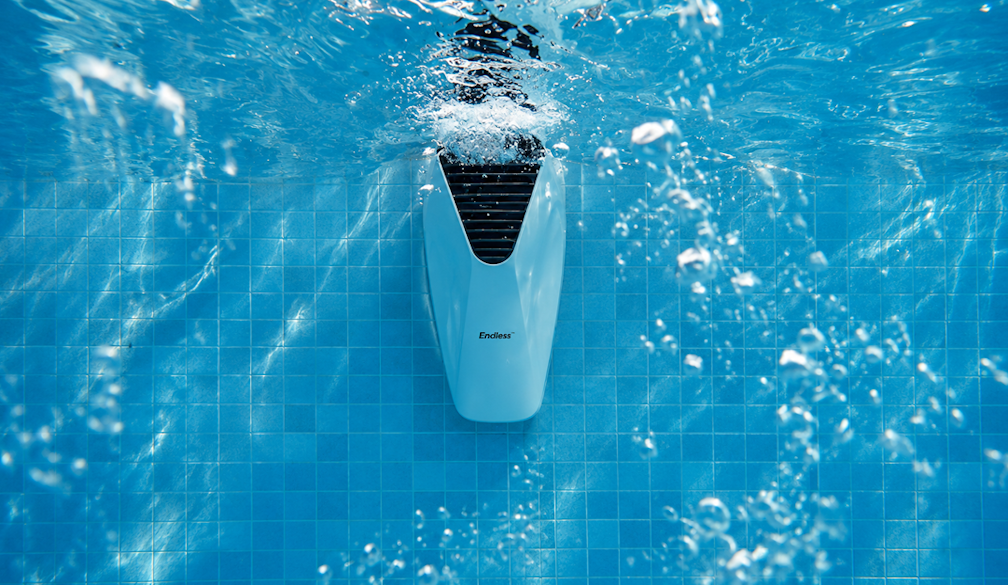
The iGarden Swim Jet X Series brings this approach to existing residential pools in a portable, battery-powered format. Its edge-mounted design allows the unit to be positioned on a compatible pool edge without drilling into the pool wall or installing permanent plumbing.
A separate rechargeable battery power box supplies the system, so there is no trailing mains power cable running to the swimming unit during operation.
For homeowners who have already invested in a finished backyard, this offers a way to introduce continuous swimming without committing to structural changes. The equipment can also be removed and stored when it is not needed, subject to the manufacturer's handling and storage instructions.
Built-In Systems vs. Portable Swim Jets
|
Feature |
Traditional Built-In Swim Systems |
iGarden Swim Jet X Series |
|
Installation |
May require pool-shell modifications, plumbing and electrical work, depending on the system |
Portable edge-mounted setup without permanent pool modifications |
|
Power Supply |
Generally mains-powered; electrical requirements vary |
Separate rechargeable battery power box |
|
Pool Compatibility |
Depends on pool design and installation requirements |
Suitable for many existing pools that meet mounting and clearance requirements |
|
Flexibility |
Permanently positioned once installed |
Removable and easier to store when not in use |
|
Best Suited For |
New pool construction or planned renovations |
Homeowners looking to add counter-current swimming to an existing compatible pool |
The two approaches serve different needs. A built-in system may suit someone designing a new pool or planning a substantial renovation. A portable unit offers more flexibility for homeowners who want to retain their existing pool layout.
What Does It Actually Feel Like to Swim Against the Current?
Product specifications can explain how much water a swim jet moves, but they don't necessarily tell homeowners what it feels like to use one.
A real-world swimming experience with the iGarden Swim Jet X Series highlights the difference between swimming in still water and working against a continuous current.
In conventional lap swimming, every stroke propels the swimmer forward. With a counter-current unit, the aim is to maintain a steady position against the incoming flow.
- Finding your balance: At lower flow settings, swimmers can take time to adjust their body position and find a comfortable horizontal posture. Maintaining position feels different from moving through still water, particularly for someone using a swim jet for the first time.
- Increasing the intensity: As the flow level rises, holding a steady position requires more effort. Core stability, body alignment and stroke efficiency become increasingly important. Small changes in hand entry or body position can affect how comfortably a swimmer stays within the current.
- Maintaining a rhythm: Once comfortable with the flow, swimmers can concentrate on breathing, pacing and stroke technique rather than repeatedly reaching the pool wall and turning around.
The system also allows users to adjust flow settings through the onboard controls or smartphone app, making it easier to find a suitable starting level before gradually increasing the intensity.
For homeowners who want to practise freestyle, breaststroke or other swimming movements in a pool that is too short for conventional laps, this is one of the main advantages of counter-current swimming.
Beneath the Surface: Flow Quality Matters as Much as Water Speed
A common misconception about add-on swim jets is that they simply churn up surface water. In practice, effective swimming depends on a consistent, well-directed current rather than excessive surface turbulence.
The iGarden Swim Jet X Series is designed to direct water away from the outlet in a focused, continuous stream. This matters because swimmers need reasonably consistent resistance to maintain their position and settle into a comfortable swimming rhythm.
The X Series offers different performance levels across its model range. The flagship X PRO 10 is rated for a maximum outlet water speed of 3.5 m/s and a maximum flow rate of 250 m³/h.
These figures describe the equipment's peak outlet performance, not the speed experienced by a swimmer throughout the pool. For the X PRO 10, the published flow speed at 1.5 metres from the outlet is rated at 1.2 m/s.
When comparing swim machines, both water velocity and flow volume deserve attention. Velocity describes how fast water moves, while flow volume indicates how much water the system moves over a given period. Neither figure alone determines the swimming experience. Outlet design, current distribution, pool dimensions and the swimmer's position all play a part.
For homeowners considering a purchase, looking beyond the headline maximum speed gives a more useful picture of what a system can offer.
Adjusting the Current for Different Swimming Experiences
Another practical feature of the iGarden Swim Jet X Series is its adjustable vertical positioning. Changing the position of the outlet affects how water enters the pool and where the movement is most noticeable.
- Deeper positioning: Placing the outlet below the water surface directs the current further into the pool. This arrangement is intended for swimming and fitness sessions where a more controlled current is preferred.
- Higher positioning: Moving the outlet closer to the waterline creates more visible surface movement and spray. This is better suited to recreational use and a more playful pool environment.
The ability to adjust the setup gives homeowners more flexibility without changing the pool's permanent structure.
However, a swim jet is fitness equipment, not a pool toy or a substitute for normal pool safety measures. Children must always be actively supervised by a responsible adult around the pool, and all users should follow the manufacturer's operating instructions. The equipment must not be operated while its battery power box is charging.
4 Practical Things to Check Before You Buy
Although a portable swim machine avoids many of the complications associated with permanent installations, checking pool compatibility beforehand is essential. The mounting area, water depth and available swimming space all affect whether the equipment can be used as intended.
1. Pool edge and coping profile
The mounting arrangement needs a suitable pool edge and a relatively vertical wall. For the standard X Series installation, the coping overhang should be less than 10 cm, while the vertical distance between the top of the coping and the water surface should be less than 40.6 cm. Pool edges with substantial ledges or benches may not provide a suitable mounting position.
2. Pool dimensions and water depth
The manufacturer's published compatibility guidance specifies more than 4 metres between the planned installation position and the opposite pool wall, with water depth greater than 76.5 cm at the installation location. A pool size of approximately 2 × 4 metres or larger is also listed as a general reference, but the actual layout and available swimming space still need to be checked.
Inflatable pools are not supported. Above-ground and in-ground pools may be suitable, provided their edge structure and mounting conditions meet the requirements.
3. Battery runtime and charging
Battery endurance varies between X Series models and depends on the selected flow intensity. The X PRO 10 offers up to 10 hours of runtime under suitable operating conditions, while smaller battery configurations have shorter maximum runtimes.
Homeowners planning longer endurance sessions should compare the runtime specifications of each model rather than assuming every version offers the same capacity. The battery power box must also be disconnected from the charger before the swim jet is operated.
4. Storage, handling and safety
Portability makes the unit easier to remove when the pool is not in use, but it is still worth considering its weight, charging requirements and available storage space. The supplied safety tether should be secured according to the installation instructions. After use, rinsing the equipment with fresh water is recommended, particularly for saltwater pools, to help reduce corrosion.
If the pool's compatibility is uncertain, providing photographs of the entire pool and the intended mounting area to the manufacturer's technical team before ordering is a sensible precaution.
Getting More from the Pool You Already Own
Upgrading a backyard lifestyle doesn't always require an excavator, a redesigned pool shell or a substantial renovation budget.
Sometimes, a more practical improvement is one that changes how an existing space can be used without permanently changing its structure.
The iGarden Swim Jet X Series offers Australian homeowners another way to approach residential swimming. By combining portable edge-mounted equipment, rechargeable battery power and adjustable water flow, it allows compatible backyard pools to support continuous swimming and exercise without the construction work associated with many permanent systems.
For homeowners who want to get more out of their existing pool while keeping their backyard largely as it is, a portable counter-current swim machine is an option worth considering.
Explore the iGarden Swim Jet X Series and see whether it is compatible with your backyard pool.