Why Storage Problems Often Start at Setup Stage
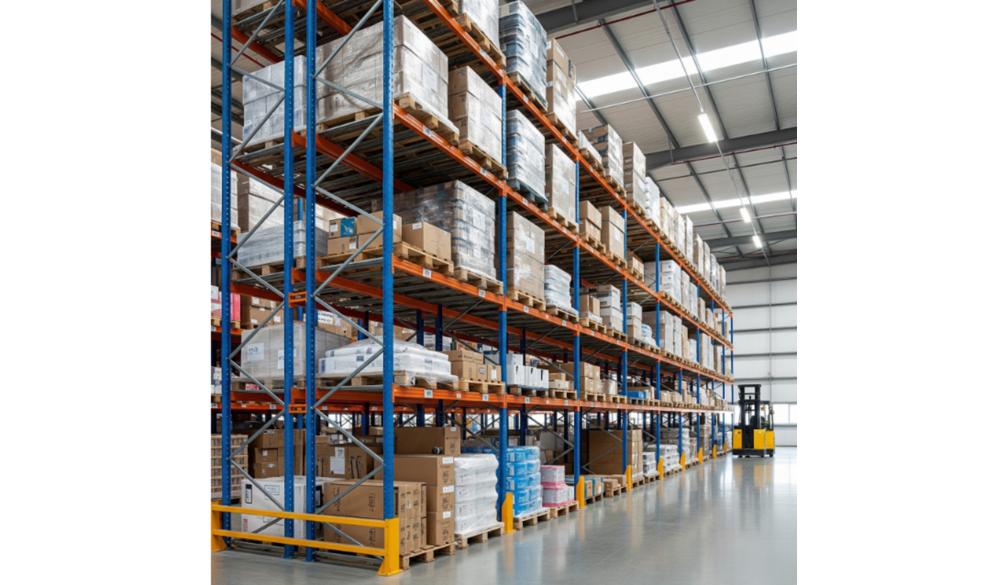
When warehouse teams experience racking issues months after expansion — leaning frames, beams that don’t sit evenly, anchors that begin to loosen — the immediate reaction is often to question the equipment itself. But in many cases, the root cause isn’t the steel. It’s how the system was assembled and positioned in the first place.
Racking carries significant weight every day. Pallets are loaded and unloaded repeatedly, forklifts navigate tight aisles, and operational pressure is constant. If the original setup didn’t account for structural alignment, floor variation, or load distribution, those minor oversights gradually become visible.
This is why pallet rack installation should be treated as a structural phase of the project, not simply the final step before inventory moves in.
Floors Are Rarely Perfectly Level
Even in modern facilities, warehouse floors can have slight slopes or inconsistencies. These variations may seem negligible at ground level, but over the height of a racking system, small differences can affect vertical alignment.
If uprights aren’t properly adjusted during pallet rack installation, the load may not distribute evenly across beams and frames. Over time, this uneven pressure can place stress on connectors and anchors, increasing the likelihood of long-term wear.
Anchoring and Bracing Are Critical
Anchors are sometimes viewed as routine hardware, yet they play a vital role in overall stability. In high-traffic warehouses, forklifts frequently move close to racking. Even minor contact — the kind that seems harmless — can gradually shift poorly secured systems.
Correct pallet rack installation ensures that anchoring methods align with load ratings and slab conditions. It also includes proper bracing to prevent lateral movement under operational stress.
These measures may not be visible during daily use, but they significantly influence structural resilience.
Installation Influences Workflow
The impact of installation extends beyond structural integrity. Layout decisions made during setup directly affect productivity. Aisle widths, turning clearances, pallet overhang allowances, and beam heights all shape how efficiently staff and machinery operate.
If racks are positioned without considering real movement patterns, teams may encounter bottlenecks or safety risks later. Adjusting layout after stock is loaded is far more disruptive than planning it properly at the beginning.
A well-executed pallet rack installation considers both safety compliance and operational practicality.
Preventing Long-Term Adjustment Costs
Correcting installation mistakes once a warehouse is operational can be expensive. Inventory may need to be temporarily relocated. Sections of racking may require dismantling. Downtime can interrupt order fulfilment.
These disruptions often cost more than investing in careful installation from the outset. Treating pallet rack installation as part of infrastructure planning — rather than a quick assembly task — helps avoid these reactive expenses.
Compliance and Ongoing Inspections
Australian workplace safety guidelines require racking systems to meet structural and load compliance standards. Proper installation supports smoother inspections and reduces the likelihood of corrective actions.
When racking is level, secure, and aligned with manufacturer specifications, ongoing maintenance becomes more straightforward and predictable.
Thinking Beyond Initial Setup
Warehouses evolve. Inventory profiles change, product sizes shift, and storage demands increase. A system installed with precision is easier to modify or expand later. If the foundation is sound, future adjustments are less complex.
In contrast, a rushed installation often creates constraints that limit flexibility.
A Foundation for Stable Operations
Racking systems are long-term assets. They support daily operations quietly but continuously. When installed with attention to structural alignment, anchoring, and workflow design, they contribute to safer and more efficient environments.
Most storage failures don’t occur because materials are weak. They occur because small installation details were overlooked. Addressing those details during pallet rack installation builds stability that lasts well beyond the first day of operation.
In busy warehouse environments, it’s rarely the dramatic errors that create problems. It’s the subtle ones — the alignment that was slightly off, the anchor that wasn’t fully secured, the layout that wasn’t quite measured against real movement patterns. Getting installation right from the beginning reduces those risks and supports steady performance for years to come.