Police Want to "Have a Quick Chat". Here's What a Defence Lawyer Wishes You Knew First.
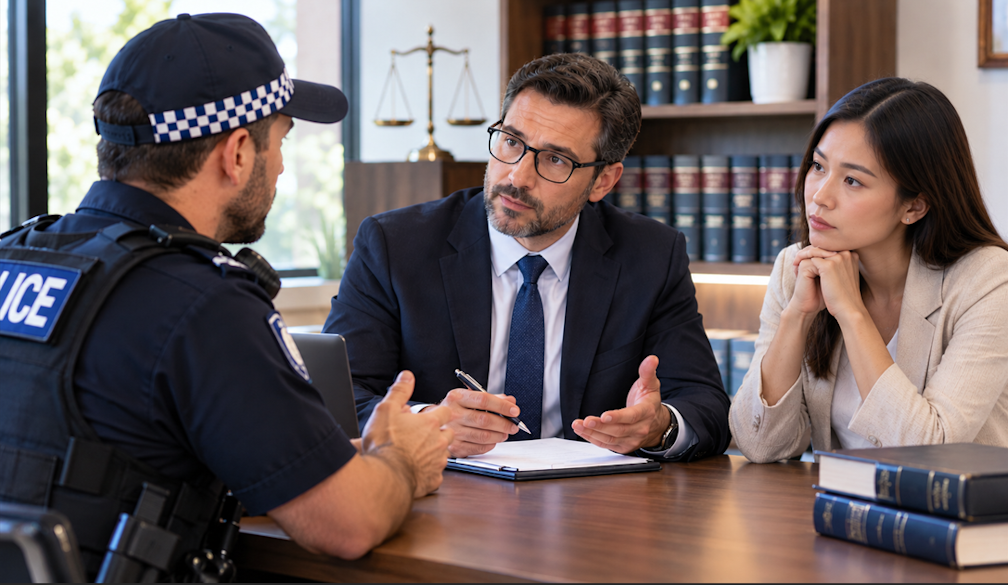
It usually starts politely: a phone call, a card in the letterbox, an invitation to "come in and clear something up". What you do next matters more than most people realise.
The moment
Picture it. Your phone rings on a Tuesday afternoon. It's a police officer you've never met, polite and calm, asking if you could pop into the station sometime this week. There's something they'd like to talk to you about.
Or perhaps you come home to find a card wedged in the door, asking you to get in touch. Or an officer standing on your doorstep says they'd just like to get your side of the story.
What's your instinct?
For most people, it's to go in, explain and get it over with. You're a reasonable person. If there's been a misunderstanding, surely the quickest way to clear it up is to talk.
That instinct is completely understandable. It's also exactly the one defence lawyers wish people would pause on, even for a few hours.
Here's what we see
Criminal lawyers hear the same story again and again. "I thought I was just helping." "I didn't think it was a big deal." "I only wanted to explain."
Here's what most people don't realise until later. A police interview isn't a casual conversation. It's part of an investigation, and what you say can be recorded, reviewed and used as evidence.
That's not a criticism of police. Investigating is their job, and most officers do it professionally. But it does mean the conversation has a purpose, and that purpose isn't necessarily to clear your name. Police are gathering information. Sometimes that information helps you. Sometimes it doesn't. And without knowing what they're looking into, you have no way of telling which.
Words like "voluntary" and "informal" can make it sound low stakes. They aren't. A friendly chat at the station can carry real weight later on.
Your basic rights, in plain English
The rules differ slightly from state to state, but some principles apply broadly across Australia.
You can ask what it's about. It's reasonable to want to know why police want to speak with you before you agree to anything.
You can ask whether you're under arrest. If you're not, you're generally free to leave, and attending an interview is usually your choice.
You can ask to speak to a lawyer before any interview. Police expect this question. It's routine.
You generally don't have to answer questions. In certain situations you do need to give some basic details, such as your name and address. Beyond that, you can usually decline to answer.
None of this is rude, and none of it is suspicious. Asking these questions is simply knowing where you stand. Stay calm and polite while you do it. A respectful tone helps everyone.
The mistakes we see most
Most people who get into difficulty after speaking with police aren't trying to hide anything. They're trying to be helpful. These are the traps that catch them.
"I've done nothing wrong, so I'll just explain." Being innocent doesn't mean you know what the allegation is or what evidence exists. You might innocently say something that fits a version of events you didn't even know was being considered.
Guessing or filling silences. Under pressure, people try to be helpful by estimating times, filling gaps in their memory or agreeing with suggestions. Uncertain answers can later be read in ways you never intended.
Letting yourself be rushed. A call asking "can you come in this afternoon?" creates a sense of urgency. In reality, very little is so urgent that it can't wait for advice.
Treating it as minor. A matter that seems small can have consequences that reach well beyond court. That's especially true for people in regulated professions. For a nurse, doctor or other registered health practitioner, a police matter can sometimes lead to a separate look at possible AHPRA misconduct, so what's said early can matter on more than one front. Teachers, licensed tradespeople and others whose work depends on background checks may also have more at stake than they realise.
Talking about it elsewhere. Texting friends, posting online or talking it through with workmates can all create problems of their own. Until you've had advice, the fewer people you discuss it with, the better.
What a good lawyer does in that first call
So what actually happens when you call a defence lawyer first? It's usually far less dramatic than people expect.
A good lawyer will start by calming things down. They'll explain what's going on in plain language and what your options are.
They'll try to find out what police want to talk about. Sometimes the lawyer will contact police directly on your behalf, which can take a lot of pressure off you.
They'll talk you through your choices honestly. Sometimes answering questions makes sense. Sometimes it doesn't. That's a decision best made once you understand the situation, not on the spot.
And if you decide to go ahead with an interview, they can be there with you, so you're not walking in alone.
Asking for advice isn't an admission of anything
Many people hesitate to call a lawyer because they worry it will make them look guilty. It won't. Getting advice before an important conversation is what informed, sensible people do. You'd speak to an accountant before a tax audit, or a doctor before a major decision about your health. This is no different.
So if police ever ask for a quick chat, remember three things. Stay polite. Stay calm. And don't make the decision alone.
This article is general information only and isn't legal advice. Police powers and your rights vary between states and territories, so get advice about your own situation.