Decorating in Stages: A Smarter Way to Build a Home You Love
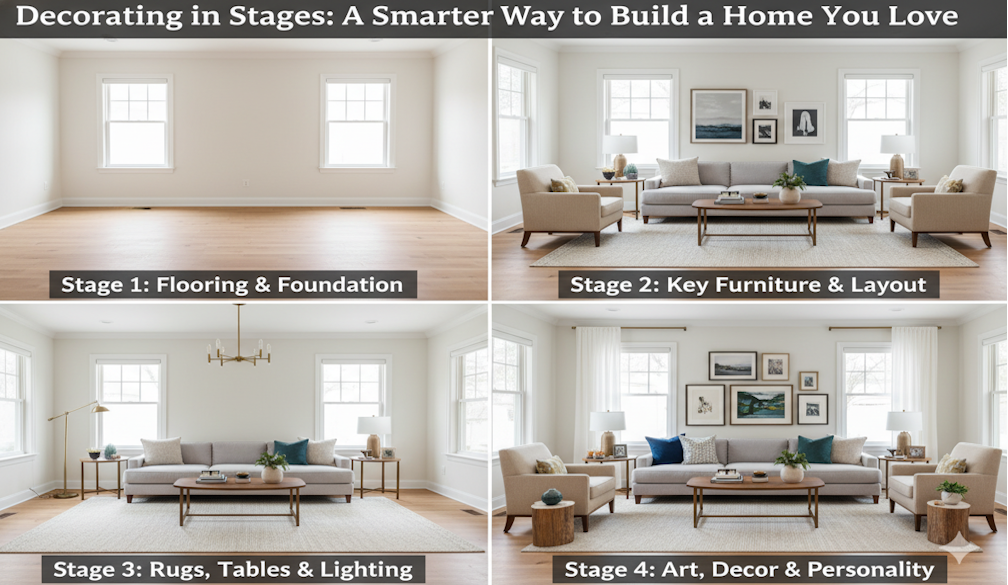
There is a lot of pressure to make a home look “finished” as quickly as possible. Between inspiration images, showroom displays and social media tours of perfectly styled rooms, it is easy to feel as though every corner of a home should come together in one seamless sweep. In reality, the most inviting homes are often the ones that evolve gradually. They are shaped over time, not rushed into existence over a single weekend.
Decorating in stages is not about doing less. It is about doing things with more care, more intention and, quite often, better results. Instead of filling rooms quickly and hoping it all works later, this approach gives you the chance to understand how you live, what you actually need, and which choices will still feel right six months or two years from now.
This is especially useful in rooms that have to work hard every day. A dining area, for instance, might first need practicality and flexibility before anything else. Choosing pieces such as comfortable stackable dining chairs can help create a functional base while giving you time to decide what kind of larger design direction the room should eventually take. That is the real strength of staged decorating: you can begin with what matters most and build outward with confidence.
Why decorating slowly often leads to better homes
When people decorate too quickly, they often make decisions based on urgency rather than suitability. They buy a coffee table because the room feels empty, a rug because the floor looks bare, or artwork because the walls need something. While those purchases can fill visual gaps, they do not always solve the bigger question of how the home should feel and function.
Decorating in stages flips that mindset. It encourages you to begin with the essentials and then live with them for a while. You notice where the natural light falls in the afternoon. You figure out whether a room needs softness, storage, contrast or warmth. You start to recognise whether you are drawn to cleaner lines, more texture, darker tones or lighter finishes. Rather than forcing a final look too early, you let the space reveal what it needs.
This creates a home that feels more personal and less assembled. It also reduces the risk of expensive mistakes. Buying fewer things at once usually means fewer compromise purchases, which in turn means less waste, less styling fatigue and a much stronger long-term outcome.
Start with function before layering style
A smart staged approach begins with how the space needs to work. Before thinking about styling accessories, trend-driven finishes or decorative extras, it helps to establish the practical foundation of a room.
In a living room, that may mean getting the sofa right before anything else. In a bedroom, it may mean investing in quality bedding and bedside lighting before worrying about wall décor. In a dining zone, it might involve choosing seating that suits the way you entertain, the size of the room and how often the furniture needs to be moved or stored.
Starting with function does not mean sacrificing style. It simply means that your style decisions are built on something useful. Once the major pieces are doing their job properly, every later addition becomes easier to judge. You can ask better questions: Does this sideboard add warmth or clutter? Does this rug help define the room or overwhelm it? Does this pendant make the space feel more refined, or just more crowded?
When the functional base is right, styling becomes less about rescuing a room and more about refining it.
Give each room time to tell you what it needs
One of the biggest benefits of decorating gradually is that it teaches patience in the best possible way. A room rarely reveals itself on day one. It changes as you use it. A corner you thought needed a chair may actually want a lamp and open space. A room that seemed large enough for oversized furniture may feel cramped once daily life begins to unfold inside it.
Living in a space before fully decorating it gives you valuable information. You notice traffic flow. You learn where people naturally gather. You discover whether a room feels flat because it lacks colour, or because it lacks contrast in materials and height. These are details that are hard to predict when buying everything at once.
This is how homes develop depth. Rather than forcing a complete look from a moodboard alone, you allow the home itself to participate in the process. Over time, the rooms begin to feel considered, balanced and believable.
Focus on one strong decision at a time
Trying to solve an entire room in one shopping trip can lead to diluted choices. Everything starts competing. You are choosing a rug while also second-guessing a chair, comparing table finishes, thinking about artwork and trying to remember whether the curtains need replacing. It is no surprise that people end up overwhelmed.
Decorating in stages works better when you focus on one strong decision at a time. That might be the dining table first. Then the chairs. Then lighting. Then a rug, if the room still calls for one. Each choice gets the attention it deserves, and each new layer responds to the ones already in place.
This also tends to produce more interesting interiors. When every item is purchased at once, rooms can end up looking too matched or too showroom-perfect. But when pieces are introduced over time, there is usually more variation in shape, finish and character. The result feels collected rather than prescribed.
Budgeting becomes more realistic and less reactive
Another reason staged decorating makes sense is financial. Furnishing and styling an entire home in one go can be expensive, and the pressure to “complete” everything often leads people to either overspend or settle for cheaper items they plan to replace later.
Taking a staged approach allows you to prioritise. You can spend more where quality matters most and hold off where decisions can wait. That might mean investing in a dining setting you use every day, while delaying occasional furniture or decorative objects until you have a clearer vision.
It also gives you time to save for better pieces instead of filling the room with placeholders that never quite feel right. In many cases, a more slowly built home ends up costing less in the long run because there are fewer replacements, fewer regrets and fewer impulse purchases that lose their appeal after a few months.
Styling should support the room, not rush it
Once the foundational furniture is in place, styling can begin to add softness, personality and cohesion. But even here, decorating in stages remains valuable. Accessories are most effective when they respond to the room that already exists, rather than trying to invent one from scratch.
Textiles, lighting, greenery, books, ceramics and art all work better when the core pieces have settled. You can see what is missing more clearly. Maybe the room needs something tactile, such as linen or timber, to soften a hard finish. Maybe it needs a darker element to ground the palette. Maybe it needs height, asymmetry or a more lived-in sense of rhythm.
Styling in this way feels more natural because it is based on observation rather than obligation. Instead of buying décor just to tick a box, you are using it to support the atmosphere you want the room to have.
A staged home often feels more authentic
Perhaps the most underrated advantage of decorating slowly is the emotional one. Homes built in stages tend to carry more story. The pieces are not all tied to the same moment, same shop or same trend cycle. Some arrive because they solved a problem. Others because they brought beauty. Others because, after months of consideration, they simply felt right.
That layered timeline creates authenticity. It makes the home feel like an extension of the people living in it, rather than a set assembled for effect. There is more room for personality, more room for adjustment and more room for the small decisions that quietly shape how a home feels.
A home does not need to be instant to be impressive. In fact, the homes people remember most are often the ones that feel settled, thoughtful and real.
How to decorate in stages without losing momentum
The key is not to leave everything unfinished indefinitely, but to move with intention. Start by identifying the most important rooms and the most essential pieces within them. Make those decisions carefully. Then pause. Live with them. Observe what is working and what is still missing.
Keep a broader vision in mind so the home feels cohesive, but do not force every detail before it is ready. Save inspiration. Revisit ideas. Let practicality guide some decisions and instinct guide others. Good decorating is not just about taste; it is about timing.
Progress made thoughtfully is still progress. A room can feel beautiful, useful and welcoming long before it is “complete”.
Build a home that grows with you
Decorating in stages is a smarter way to create a home because it respects the reality of living. It allows for better decision-making, stronger functionality, more meaningful style and a calmer relationship with the process itself. Rather than chasing a finished look as quickly as possible, you create a home that grows more resolved with time.
And that is often the difference between a house that merely looks decorated and a home that genuinely feels loved. When you give rooms the chance to evolve, you are not falling behind. You are building something better.