Steel vs Timber vs Plastic Garden Edging: What Actually Lasts
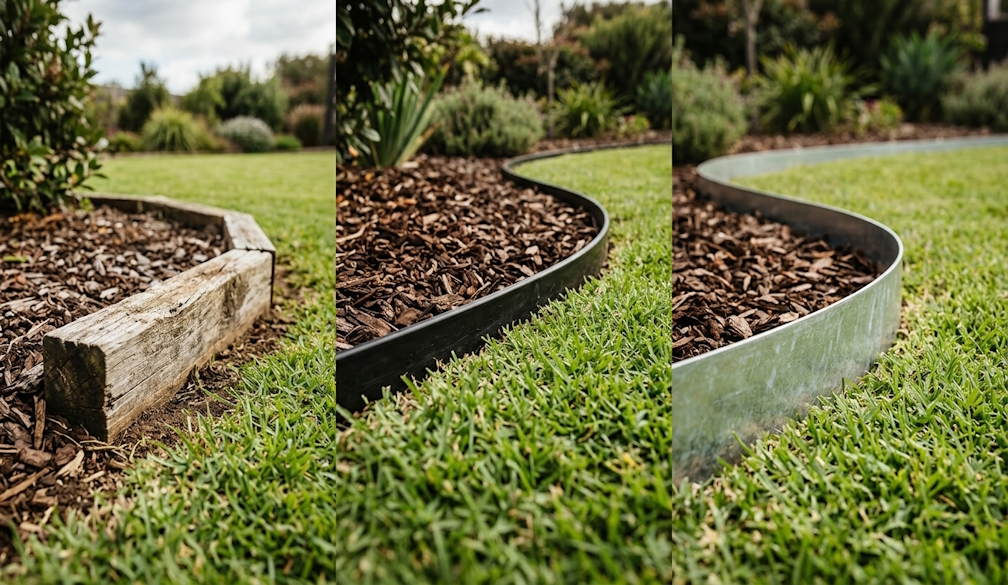
Walk any hardware aisle and you'll see three types of lawn edging aisles fighting for the same job: keeping mulch where it belongs and grass where it doesn't. Most people pick based on price at the till, then find out five years later which choice they actually made.
Timber looks warm. It also has a use-by date.
Timber sleepers do something steel and plastic can't, they soften a border, especially in cottage or naturalistic gardens where a hard edge feels wrong. Cutting and placing them takes nothing more than a saw and a weekend. The catch shows up underground: timber species is the whole ballgame. Untreated pine softens within a few years in damp soil, but treated hardwood and steel uprights last well over a decade. Buying timber without checking the species turns a long term promise into a short term problem.
Plastic wins on price, loses on everything after that.
Plastic edging earns its shelf space honestly, it's the cheapest option going in, and snap-together or roll-out designs mean almost anyone can install a border in an afternoon. What it doesn't do well is stick around. UV exposure makes most plastic edging brittle within five to ten years, at which point it cracks, lifts, or bows out of line, usually right where a mower catches it. It's a genuinely sound choice for a rental property or a garden bed you might redesign next year. It's a weaker one for anything meant to outlast the plants growing next to it.
Steel does the boring thing well: it just stays there.
Steel's whole appeal is what it doesn't do. It won't rot. Termites have zero interest in it, and a hard frost isn't going to crack it the way it can timber. Properly galvanised steel holds a straight line for decades, coastal air and damp soil included. That's not nothing, especially next to a timber edge that's already sagging by year five. The tradeoff is upfront cost, steel runs more per linear metre than plastic and usually more than timber too, and you'll want the right tools to cut or bend it rather than whatever's in the shed already.
What changes the calculation: gauge, finish, and shape
Not all steel edging behaves the same way, and this is where a lot of buying decisions go wrong. A thin gauge dents underfoot and along a mower's path; a heavier gauge holds its line through years of foot traffic and lawn edging without complaint. Finish matters just as much, galvanised steel resists corrosion from the outset, while weathering steel (sold in Australia as Redcor, the local equivalent of corten) is designed to rust into a stable, rich patina rather than corrode away, which is a feature for people chasing that look and a surprise for people who weren't expecting their edging to change colour.
Shape is the other variable people forget to ask about. Rigid steel panels only do straight lines. Modular systems built to bend on-site handle both straight runs and flowing curves without needing a completely different product for each, which matters the moment a garden design calls for anything other than a rectangle.
The material question is really a timeline question
None of this makes timber or plastic the wrong choice, a rental garden or a bed that'll be redesigned next season doesn't need a material built to outlast the house. But for a border meant to hold its line for decades rather than seasons, steel's advantage isn't really about looks. It's that it's still doing the job long after the other two options have needed replacing. If you're weighing up which edging suits your project, your local landscape supplier or nursery can point you toward a stockist and talk through gauge and finish for your soil and climate.